Two Cats Are Easier Than One (Mostly)
We adopted a second cat to keep the first one company. Here is what changed, and the one thing that did not.
The advice is everywhere: cats are solitary, one is enough. It is half right. Cats hunt alone. They do not necessarily live alone, and a single indoor cat with a working household is often a bored cat. We got a second one eighteen months ago. Here is the honest account.
What got easier
The three a.m. zoomies stopped being aimed at us. They now have each other to chase. The destruction of the sofa arm slowed down, because the energy went somewhere else. The clingy, follow-you-to-the-bathroom behaviour from our first cat softened into something more relaxed. She had a colleague.
What got harder
Two litter trays became three. Vet bills doubled, as you would expect. Feeding needed thought, because one cat eats like a vacuum and the other grazes. We ended up with a microchip feeder for the grazer, which solved it, and which the vacuum cat regards as a personal insult.
The introduction
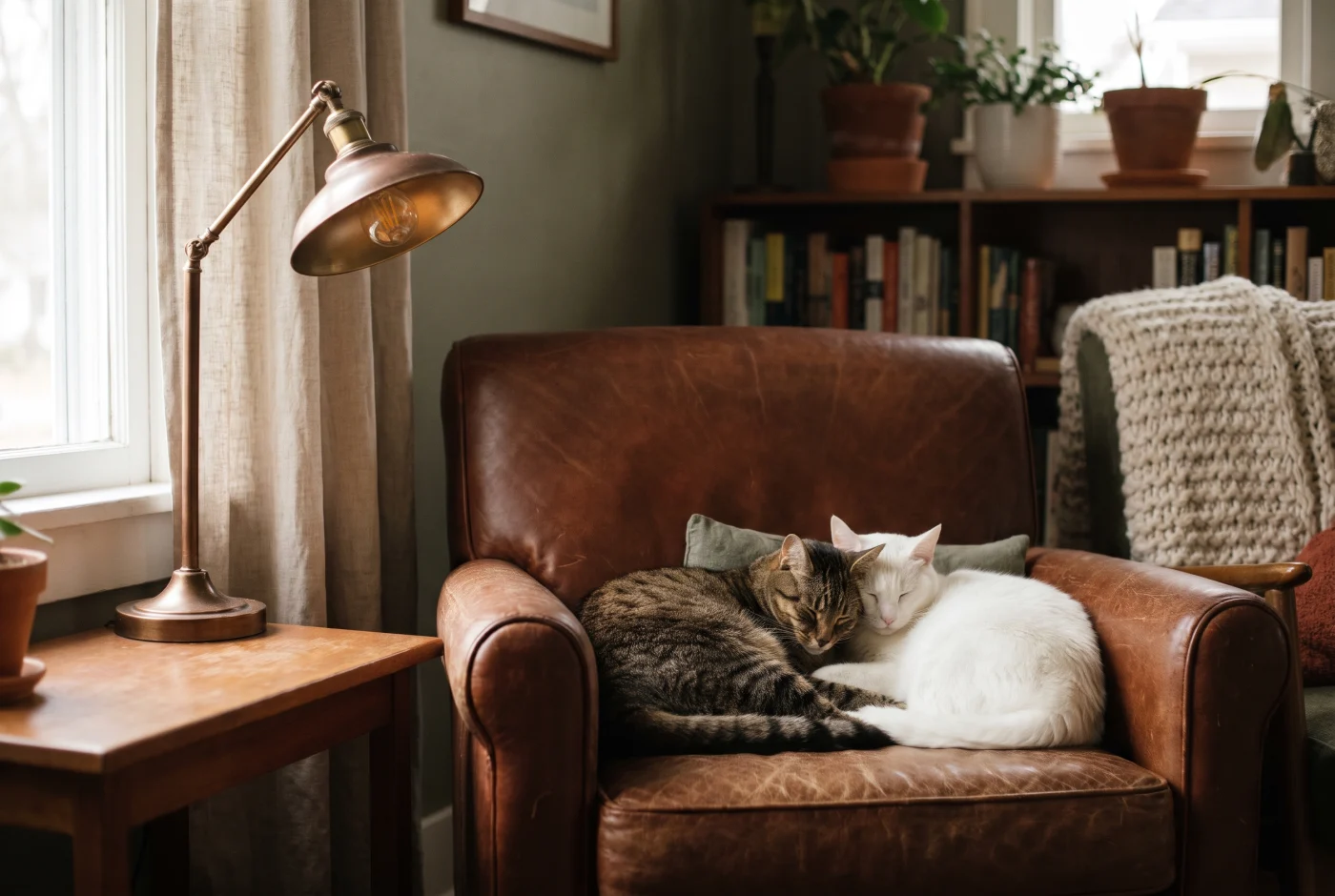
This is the part people rush. Do not. We kept the new cat in a spare room for a week. Swapped blankets so they could smell each other. Fed them on either side of the closed door. Then a baby gate, then supervised time, then the door open. Total: three weeks. There was hissing. There was one slap. Then, one evening, we found them on the same armchair and that was that.
Slow introductions feel absurd on day three and brilliant on day thirty.
The one thing that did not change
They still both want the same lap. There is one lap. We have not solved this and we do not expect to.