A Field Guide to the Loaf
Paws tucked, tail wrapped, eyes at half mast. The loaf is the most trusted posture in the house, and it has rules.
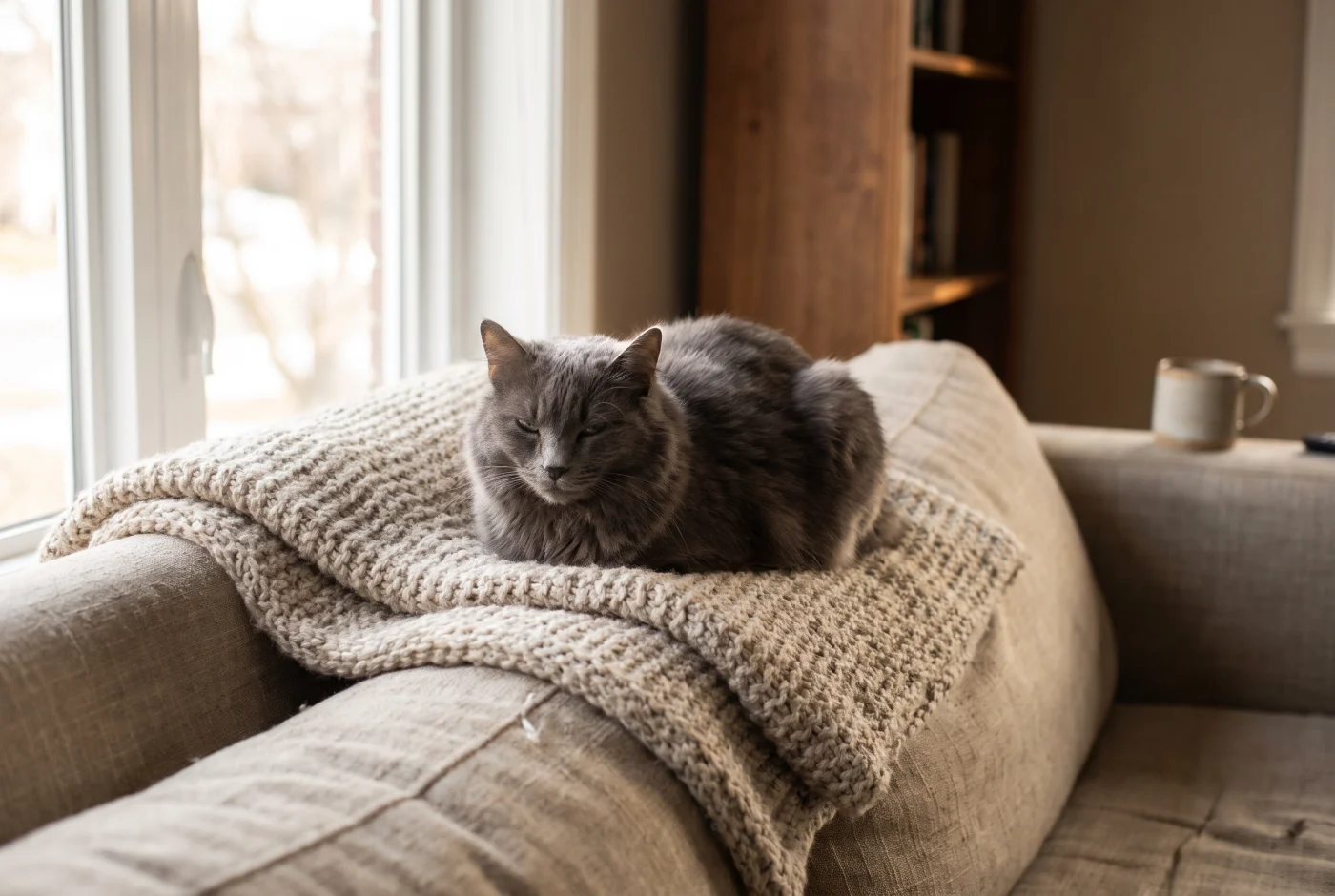
Every cat owner knows the shape. Paws folded under the chest, tail curled around the body, the whole animal compressed into something that looks like it came out of a bread tin. The loaf. It looks like nothing is happening. A lot is happening.
What the loaf is telling you
A cat with its paws tucked away cannot bolt. It cannot swat. It has, in effect, put its weapons in a drawer. That is a cat telling the room it feels safe enough to be slow. If your cat loafs near you, take the compliment. If it loafs facing away from you, take the bigger compliment: it does not feel the need to watch you.
The loaf is not laziness. It is a cat deciding that nothing in the room needs to be managed.
The varieties
- The full loaf. All four paws hidden, tail wrapped. Textbook. Usually on a blanket, a warm laptop, or the one piece of paper you needed.
- The partial loaf. One paw sticking out. The cat is comfortable but has left itself an exit. Common on new furniture.
- The sphinx. Front paws extended, head up. Alert. This is a cat that is resting but still on duty.
- The face loaf. Chin pressed into the surface, eyes closed. Rare, and the highest level of trust a loaf can express.
When a loaf is not a loaf
One caution. A cat that loafs constantly, with its head low and its back slightly hunched, may be hiding discomfort rather than enjoying the sun. Cats are good at hiding pain and the loaf is a convenient hiding place. If the loafing is new, constant, and comes with a cat that has gone quiet, it is worth a call to the vet.
Otherwise, let it be. A loaf should not be moved, poked, or photographed with flash. It should be admired from a respectful distance, ideally with a coffee.