The Physics of the Afternoon Nap
A cat sleeps up to sixteen hours a day. The afternoon slot, belly-up in a sunbeam, is the premium one.
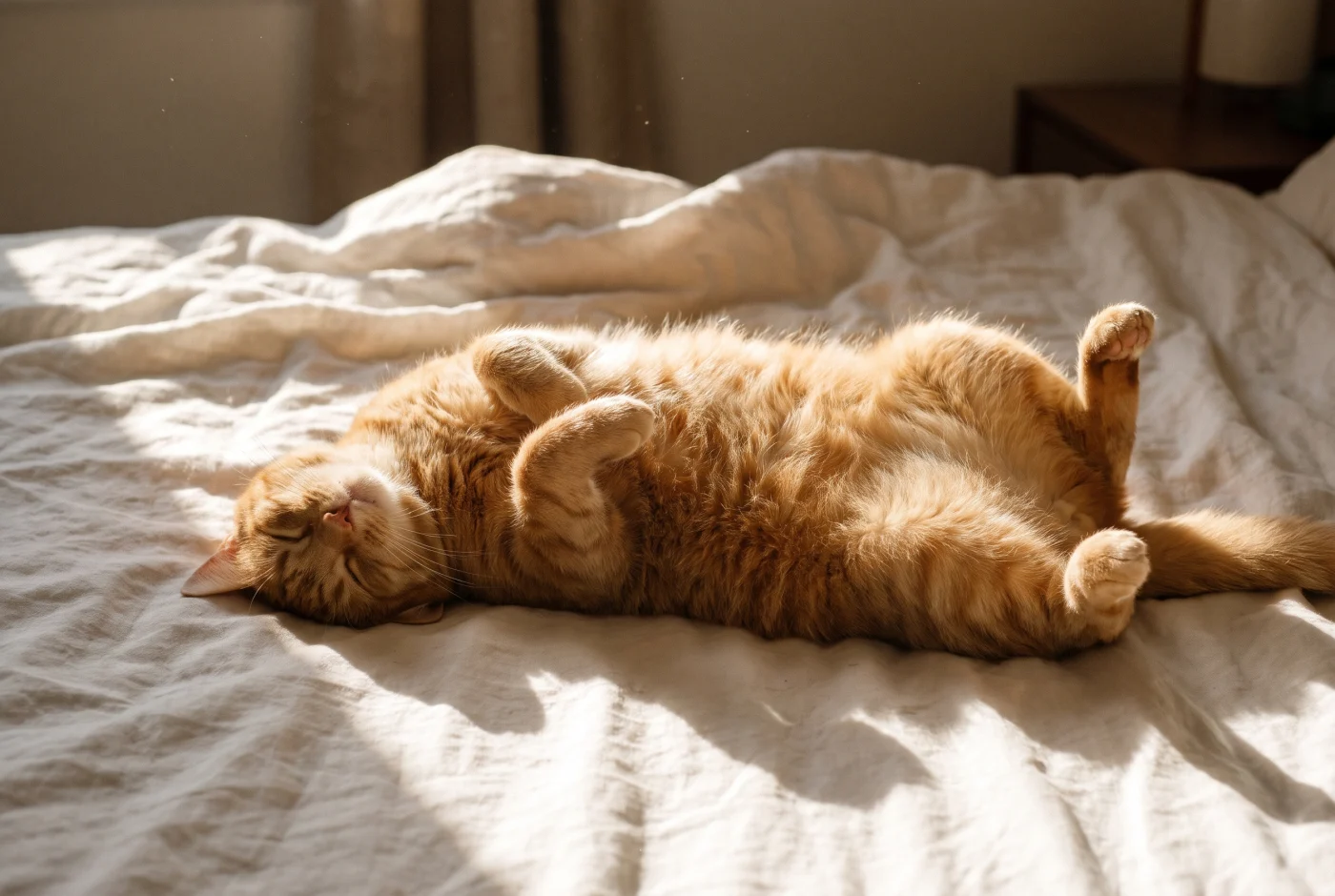
Somewhere between two and four in the afternoon the house goes quiet. The cat has found the sunbeam. It has arranged itself on its back, paws in the air, head tipped sideways in a way that looks medically concerning and is in fact the picture of contentment.
Why so much sleep
Cats are crepuscular. They are built to hunt at dawn and dusk and to save energy between. Sixteen hours of sleep is not laziness, it is a hunting animal keeping the battery full for two short, intense shifts. Most of that sleep is light. The cat's ears still move. Its tail still twitches at sounds. It is resting with one process left running.
The belly-up position
A cat on its back has exposed the one part of itself it protects most. It can only do that where it feels completely unthreatened. It is also a thermal decision. The belly has thinner fur, and a cat in a sunbeam is using it as a solar panel. You will notice the cat migrates with the light, a few inches at a time, across the afternoon.
The sunbeam moves. The cat moves with it. Neither of them is in a hurry.
Do not touch the belly
This is the rule everybody learns once. An exposed belly is a sign of trust, not an invitation. Reaching for it triggers a reflex involving all four sets of claws. Admire. Take the photo. Keep your hands to yourself. The cat will come and find you when the sun goes.